Algorithmic trading, and where the difficulty actually sits
In algorithmic trading the strategy is usually the shortest part of the code, and the difficulty sits in execution, position sizing and the conditions under which the system stops, because a strategy that is right most of the time can still lose everything on the occasion it is not.
Algorithmic trading means a program deciding and placing trades according to rules. The rules get the attention and they are the smallest part of the work.

Start from a working app
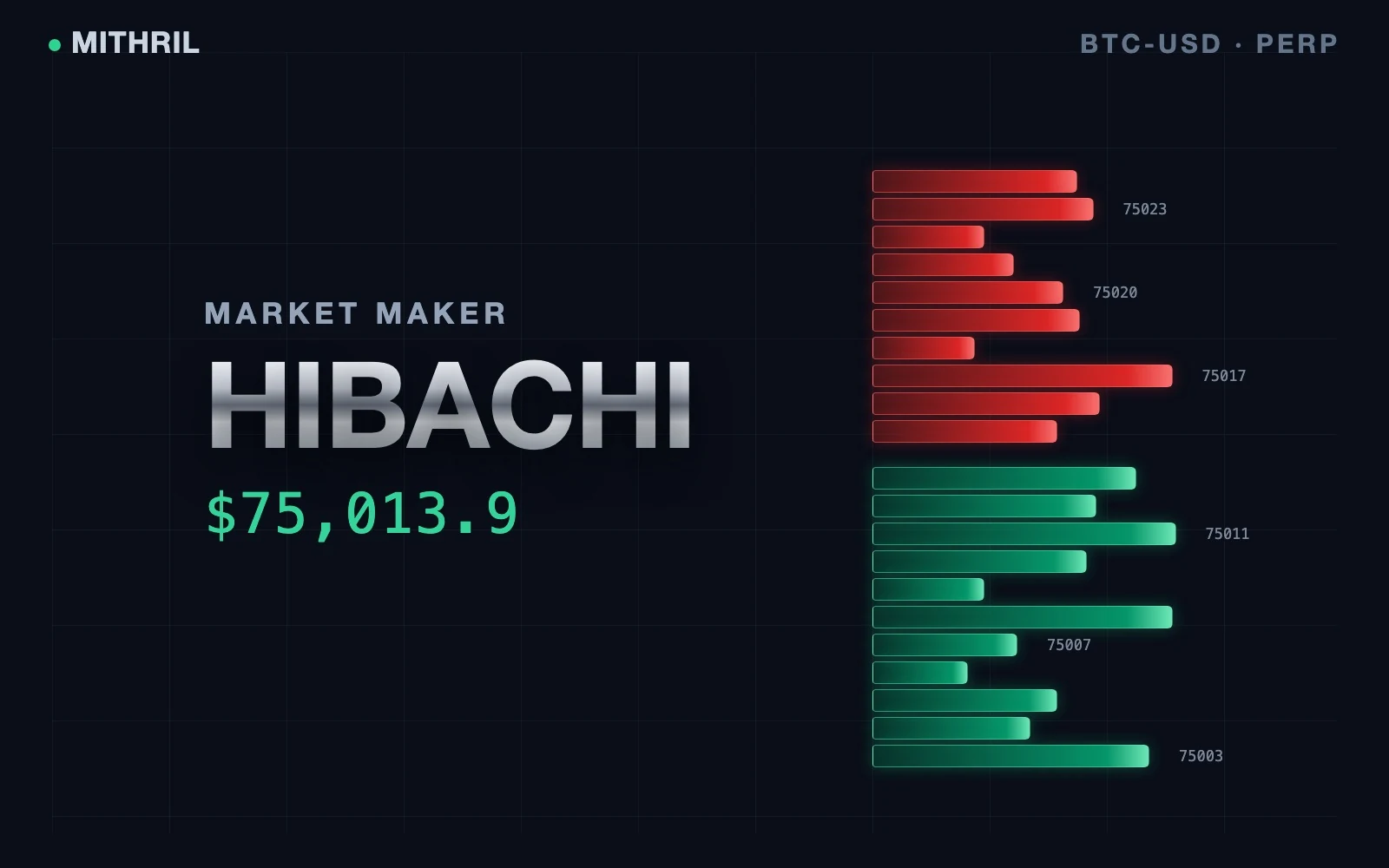
Market Maker
a live market-making desk for Hibachi perps: set your capital and strategy, then watch spread, inventory and PnL.
Open the template
The strategy fits on a page
Most do. Entry rule, exit rule, sizing rule. If that were the whole job it would be an afternoon, and the reason it is not is that a rule which works on paper meets a market that does not fill instantly, at the price you saw, in the size you wanted.
Execution is where the edge goes
The price you saw is not the price you get. Crossing the spread, moving the book with your own size, and being filled only on the side you did not want are ordinary events, and a strategy with a thin edge loses it entirely to them. This is the gap between a backtest and a live account, and it is usually larger than the edge being traded.
Risk code outnumbers strategy code
How much to risk. What happens on a partial fill. What happens when the venue stops responding mid-position. When to stop entirely. None of it is the idea, and all of it decides whether the idea survives contact with a bad day.
The failure that actually costs everything
Not a wrong prediction, which loses one trade. A system that keeps trading through a condition it was never designed for: a stale feed, a halted market, a fill it did not expect. It then loses in a loop, quickly, usually unattended. Building the stop before the strategy is the only reliable protection.
What to check before going live
That your data is current and that you would know if it were not. Most catastrophic automated losses trace back to a system acting confidently on information that had stopped updating, which is why a feed that reports its own staleness is worth more than a faster one.
Live, right now, on this page
| Market | Price | Funding | 24h volume |
|---|---|---|---|
| BTC | $81,687.50 | 0.0013% | $181,624,339 |
| ETH | $2,409.35 | 0.0013% | $154,383,039 |
| SOL | $103.28 | 0.0013% | $34,423,620 |
| HYPE | $78.55 | 0.0013% | $6,599,844 |
Read from a live market as this page rendered, through a public endpoint that needs no key. Read at 2026-10-18 07:45 UTC; accurate as of that time and not afterwards.
Start from a working app
Open, change it, publish your own
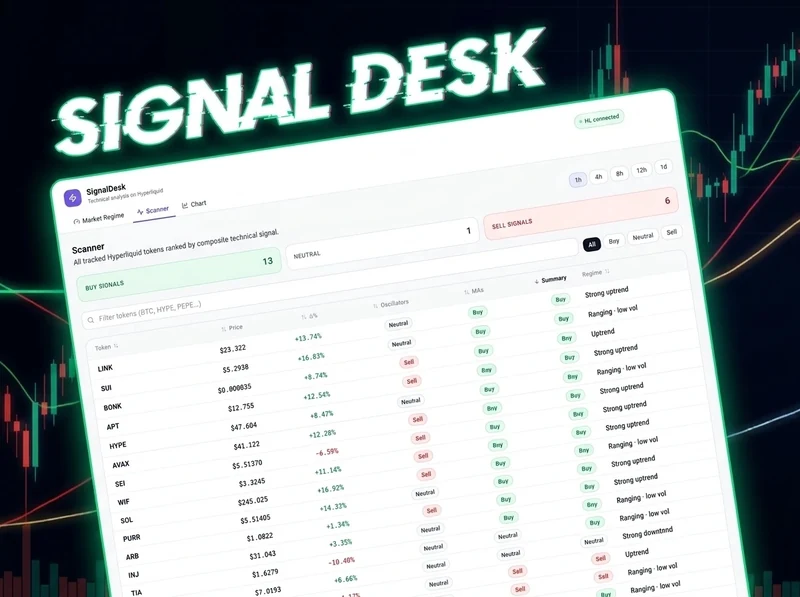
SignalDesk
a multi-token scanner ranked by a composite signal, with a candle chart and technical indicators, on Hyperliquid.
Open the template
Working templates built around what this page covers. Open one, change it, and publish your own.
- Market Maker
a live market-making desk for Hibachi perps: set your capital and strategy, then watch spread, inventory and PnL.
- Pacifica Market Maker
a live market-making desk for Pacifica perps: set your capital and strategy, then watch spread, inventory and PnL.
- SignalDesk
a multi-token scanner ranked by a composite signal, with a candle chart and technical indicators, on Hyperliquid.
Common questions
Where is the difficulty in algorithmic trading?
Not in the strategy, which usually fits on a page. It is in execution, position sizing and the conditions under which the system stops, because a strategy that is right most of the time can still lose everything the one time it is not.
Why does a live trading system underperform its backtest?
Execution. The price you saw is not the price you get: crossing the spread, moving the book with your own size, and partial fills are ordinary events, and together they are often larger than the edge being traded.
What should I check before an algorithm goes live?
That your data is current and that you would know if it were not. Most catastrophic automated losses trace back to a system acting confidently on information that had stopped updating, so a feed that reports its own staleness is worth more than a faster one.
See the number itself
Pages that read a live market and show what they read, updated while you look at them.
- Monero price, live, on an asset most exchanges no longer list, a perp on an asset many exchanges no longer list, so the spot it tracks is itself thin.
- Dogecoin price, live, and why its supply matters, an asset with no supply cap, where funding reads as crowding rather than value.
- Perp spread in basis points, live, the execution cost a strategy is measured against.
- HYPE perp price, live, a live perpetual to test an assumption on.
- Funding rate arbitrage, live, a carry trade whose whole edge is a number you can read.
- Platinum price today, live, and why it is not gold, a substitution trade against palladium, which is a rule a program can actually run.
- Visa stock price, live, through the tokenised share, a share moved by court and regulator calendars, which are dates a program can hold.
- Goldman Sachs stock, live, through the tokenised share, a firm whose revenue rises with volatility, which inverts the usual sign on a market selloff.
Related reading
All guides · Live market pages · Components · Make Mithril a preferred source in Google